





Eastspring Investments
June 2026|5 min read


Executive Summary

Singapore’s equity market is entering a new phase with the Equity Market Development Programme (EQDP) improving liquidity and participation while structural reforms reshape the investable universe. Against this backdrop, our jointly developed whitepaper with the Singapore Exchange (SGX), Singapore equities: From resilience to opportunity, highlights the potential of Singapore equities by analysing:
- how the market has behaved during periods of stress,
- the structural drivers underpinning its resilience, and
- the implications for future risk-return outcomes for investors.
Key highlights of the whitepaper include:
Lessons from six stress events
In four of the six events, Singapore’s peak-to-trough losses were smaller than -or broadly in line with- those seen in other Asian equity markets. It also rebounded faster than its Asian peers.
Drawdowns and recoveries across Asian equity markets
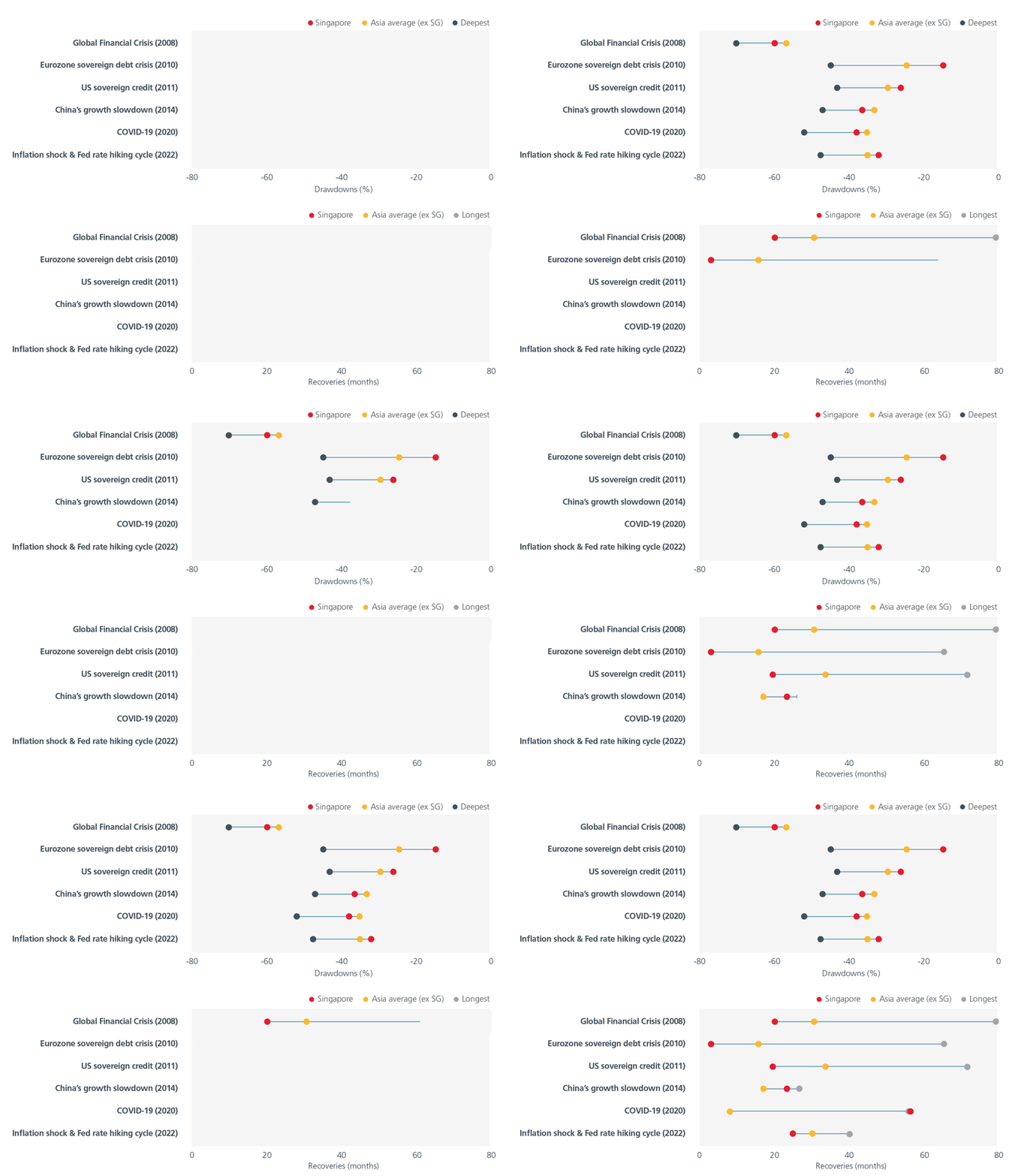
Source: Eastspring Investments. Bloomberg. MSCI Indices - daily prices in USD. Drawdowns measure peak to trough %.
The Singapore market’s drawdown and recovery profile explains its stronger risk‑return versus peers over the last decade. The question is whether this resilience can be sustained.
Four levers underpinning resilience
I. Dividend resilience
Singapore equities offer high, sustainable dividend income that helps cushion drawdowns, particularly in periods of volatility. With the banks and REITs accounting for more than 60% of the total dividends paid by the market in 2025, these sectors provide a stable income base for investors.
Breakdown of total cash dividends paid by the market (2025)

Source: Bloomberg. Using the STI Index as a proxy. Total cash dividends paid in 2025.
II. Structural resilience
Singapore has strengthened its corporate governance landscape over the past decade, with the S‑chips period (late 2000s to early 2010s) acting as a key catalyst for reform. Singapore’s regulatory framework surrounding related party transactions is not only closely aligned with OECD best practices but is also more rigorous across selected categories.
Requirements for related party transactions
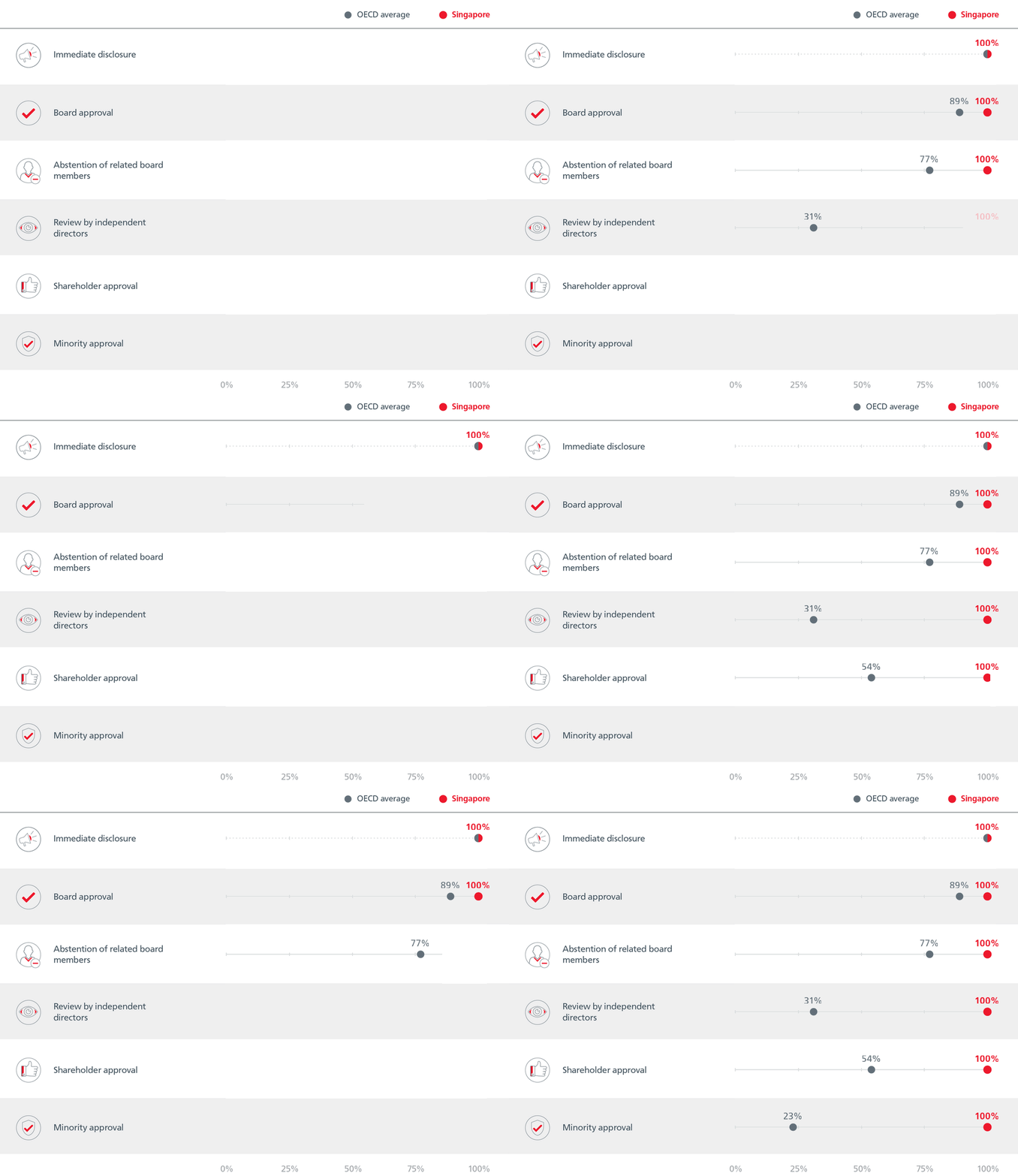
Source: Eastspring Investments, OECD data based on 35 countries from 2025 OECD Factbook on Corporate Governance.
III. Adaptive resilience
Singapore’s economy continues to adapt to global shifts, with the latest economic strategy focused on innovation, Artificial Intelligence and sustainability. As these take shape, new listings could broaden the opportunity set beyond traditional sectors.
New listings and secondary fund raisings (Number)
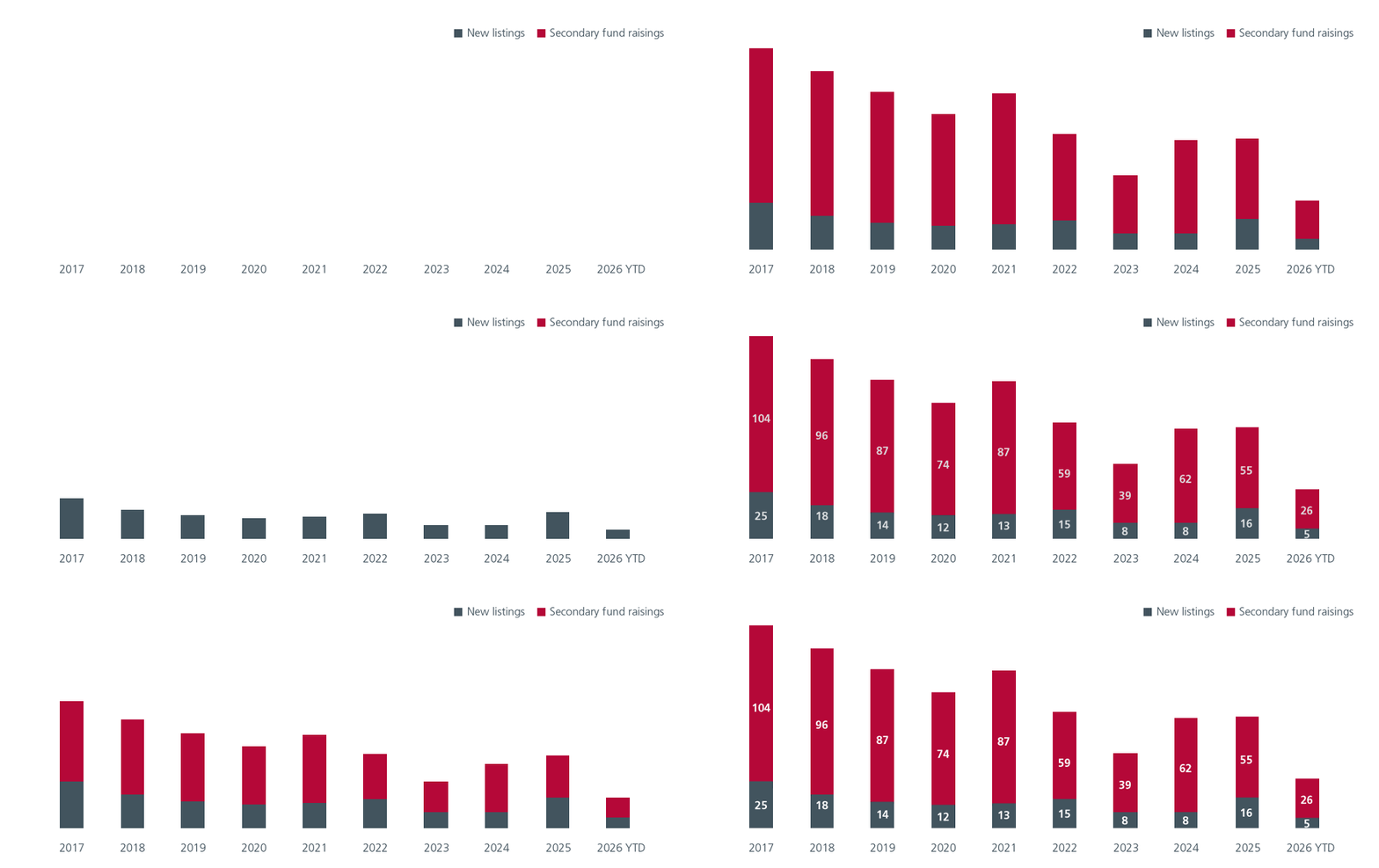
Source: SGX Market Statistics. 30 April 2026.
IV. Policy resilience
Singapore’s policy framework combines prudent fiscal management, a disclosure‑based regime and a distinct exchange rate‑centred monetary policy; the gradual appreciation of the Singapore dollar reflects the credibility and consistency of this framework.
S$ Nominal Effective Exchange Rate (NEER)
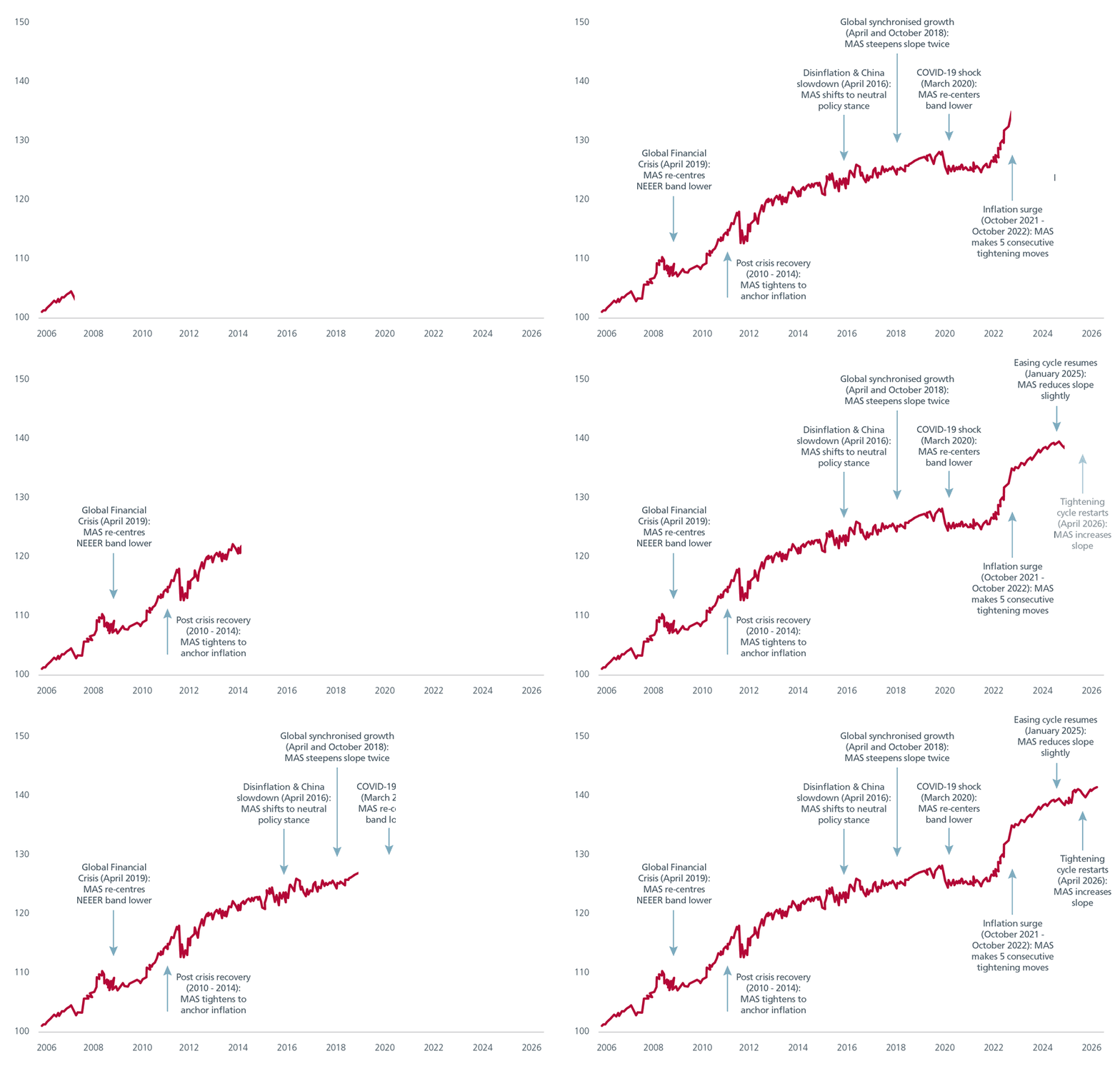
Source: Bloomberg. April 2026
Key considerations for investors
Singapore equities have seen renewed investor interest, with the recent market rally supported by policy measures, improved liquidity and safe‑haven appeal. Despite this, global investors continue to under allocate, often misclassifying Singapore and overlooking its distinct risk‑return profile and diversification benefits. The perception of Singapore as a pure “dividend play” is outdated and historical valuation ranges may no longer serve as a reliable benchmark for assessing today’s opportunity set.
Read the full whitepaper for a more detailed view of how the changing dynamics are reshaping the opportunity in Singapore equities.
Interesting reads





Singapore by Eastspring Investments (Singapore) Limited (UEN: 199407631H)
Australia (for wholesale clients only) by Eastspring Investments (Singapore) Limited (UEN: 199407631H), which is incorporated in Singapore, is exempt from the requirement to hold an Australian financial services licence and is licensed and regulated by the Monetary Authority of Singapore under Singapore laws which differ from Australian laws
Hong Kong by Eastspring Investments (Hong Kong) Limited and has not been reviewed by the Securities and Futures Commission of Hong Kong.
Indonesia by PT Eastspring Investments Indonesia, an investment manager that is licensed, registered and supervised by the Indonesia Financial Services Authority (OJK).
Malaysia by Eastspring Investments Berhad (200001028634/ 531241-U) and Eastspring Al-Wara’ Investments Berhad (200901017585 / 860682-K) and has not been reviewed by Securities Commission of Malaysia.
Thailand by Eastspring Asset Management (Thailand) Co., Ltd.
United States of America (for institutional clients only) by Eastspring Investments (Singapore) Limited (UEN: 199407631H), which is incorporated in Singapore and is registered with the U.S Securities and Exchange Commission as a registered investment adviser.
European Economic Area (for professional clients only) and Switzerland (for qualified investors only) by Eastspring Investments (Luxembourg) S.A., 26, Boulevard Royal, 2449 Luxembourg, Grand-Duchy of Luxembourg, registered with the Registre de Commerce et des Sociétés (Luxembourg), Register No B 173737.
Chile (for institutional clients only) by Eastspring Investments (Singapore) Limited (UEN: 199407631H), which is incorporated in Singapore and is licensed and regulated by the Monetary Authority of Singapore under Singapore laws which differ from Chilean laws.
The afore-mentioned entities are hereinafter collectively referred to as Eastspring Investments.
The views and opinions contained herein are those of the author, and may not necessarily represent views expressed or reflected in other Eastspring Investments’ communications. This document is solely for information purposes and does not have any regard to the specific investment objective, financial situation and/or particular needs of any specific persons who may receive this document. This document is not intended as an offer, a solicitation of offer or a recommendation, to deal in shares of securities or any financial instruments. It may not be published, circulated, reproduced or distributed without the prior written consent of Eastspring Investments. Reliance upon information in this document is at the sole discretion of the reader. Please carefully study the related information and/or consult your own professional adviser before investing.
Investment involves risks. Past performance of and the predictions, projections, or forecasts on the economy, securities markets or the economic trends of the markets are not necessarily indicative of the future or likely performance of Eastspring Investments or any of the funds managed by Eastspring Investments.
Information herein is believed to be reliable at time of publication. Data from third party sources may have been used in the preparation of this material and Eastspring Investments has not independently verified, validated or audited such data. Where lawfully permitted, Eastspring Investments does not warrant its completeness or accuracy and is not responsible for error of facts or opinion nor shall be liable for damages arising out of any person’s reliance upon this information. Any opinion or estimate contained in this document may subject to change without notice.
Eastspring Investments companies (excluding joint venture companies) are ultimately wholly owned/indirect subsidiaries of Prudential plc of the United Kingdom. Eastspring Investments companies (including joint venture companies) and Prudential plc are not affiliated in any manner with Prudential Financial, Inc., a company whose principal place of business is in the United States of America or with the Prudential Assurance Company Limited, a subsidiary of M&G plc (a company incorporated in the United Kingdom).