





Apr 2026|5 min read


Executive Summary
- My recent back-to-back trips to India and China revealed two economies at very different points in their economic cycles.
- India’s nascent domestic recovery and China’s resilient export engine offer investors distinct opportunities although the uncertain geopolitical backdrop calls for greater agility.
- The recent Iran war is expected to intensify both countries’ desire for energy security and supply chain resilience. This, together with China’s continued build-out of its AI infrastructure also creates opportunities for investors.
My back-to-back visits to India and China in February and March revealed two large economies that are at very different points in their economic cycles. India is largely a domestic recovery story, supported by reform, infrastructure and resilient consumption, though tempered by external vulnerabilities. By contrast, China’s domestic outlook is more mixed, but its manufacturing depth and technological progress continue to underpin export strength. These divergent dynamics create distinct opportunities across both markets. Meanwhile, geopolitical developments like the Iran war, further reinforce both countries desire for greater energy security and supply chain resilience, opening new investable opportunities.
India: Green shoots tempered by external challenges
My trip to India in February provided confirmation of a nascent broad-based domestic recovery, led by infrastructure and underpinned by consumption. Discussions with government officials in Delhi covered a comprehensive reform agenda spanning 23 priority areas, including power deregulation, tourism, land and education reforms.
The US-Iran war has since introduced uncertainty to India’s domestic recovery story. With ~90% dependence on imported crude, India is highly sensitive to oil prices as well as gas supply disruptions. This has raised concerns around inflation, the current account balance and currency stability. Against a backdrop where recovering domestic fundamentals are being tempered by elevated external risks, agility and active stock picking are increasingly important.
We are closely monitoring the oil price trajectory, government policies on fuel pricing and subsidies, currency movements, and the Reserve Bank of India’s monetary policy while reassessing potential opportunities:
Infrastructure - Cement and steel prices have rebounded, payments to contractors have improved, and corporate commentary across the supply chain from cement/steel players to Engineering, Procurement and Construction contractors has become more constructive. The modest upside in capital expenditure (capex) under the Union Budget, combined with a relatively light state election calendar also supports a capex recovery.
Consumption - Two-wheelers and passenger vehicles have enjoyed double-digit volume growth. The recent Goods and Services Tax cuts have encouraged consumers to upgrade variants and auto Original Equipment Manufacturers (OEMs) have been able to exercise some pricing power by partially passing on rising input costs. In property, our on-the-ground checks in Mumbai showed that while sales momentum had moderated, demand remained healthy for attractive new home launches – contrasting with the sharp share price correction of listed developers. Meanwhile, the quick commerce sector, which provides ultra-fast, hyperlocal delivery of daily-use goods, appears to be rationalising with a stronger focus on profitability.

A luxury residential project in Worli, the heart of Mumbai. Pre-sales momentum has been strong – about 60% of the launch has been sold over three months.
Datacenters - A pre-IPO due diligence site visit to a datacentre (DC) in Navi Mumbai reinforced our constructive view on India’s DC opportunity. The scale of the campus, redundancy in power infrastructure, and emphasis on energy-efficient cooling highlight the level of capital intensity and technical sophistication now required to serve hyperscaler and enterprise customers. Given India’s data localisation requirements, rising cloud penetration, and Artificial Intelligence (AI)-led workloads, we see the potential for multi-year capacity expansion going forward. Beneficiaries include landbank owners and providers of electrical equipment, cooling systems, backup power solutions, modular construction, fibre connectivity, and facility management services.
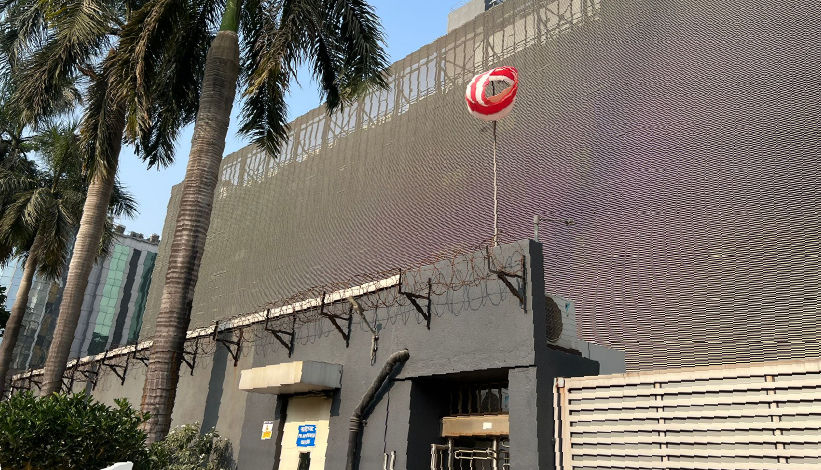
A data centre (DC) in Navi Mumbai, about 40mins drive away from Mumbai CBD. Navi Mumbai is one of the most popular locations for DCs in India given the infrastructure availability (power, sub-sea cables) and proximity to key customers (banks, exchanges).
Following the Iran war, the imperative for India to strengthen its resilience against external risks is likely to intensify, supporting opportunities in defense, power, domestic gas/Liquified Petroleum Gas and Electrical Vehicle infrastructure.
China: Export engine keeps firing
My March trip to China covered eight cities over seven days. It took place on a similar post-Lunar New Year timeline for the third consecutive year, which provides a useful like-for-like benchmark to assess corporate sentiment and investor focus.
Compared to India, China is more insulated from the direct impact of higher oil prices due to its diversified energy mix and strategic reserves. Inflationary pressures appear manageable given China’s persistent deflationary environment. Historically, rising producer prices have correlated with accelerating corporate revenue growth – a counter-intuitive market positive. That said, China’s export-driven model is exposed to second-order effects, if higher energy costs and tighter financial conditions start to weigh on global demand. This introduces potential downside risk to the otherwise strong export outlook observed during the trip.
Machinery – Exports now account for more than 50% of revenues for most heavy machinery OEMs. Companies were uniformly bullish on exports, guiding for ~20% export growth in 2026, supported by strong mining-driven demand across Africa, Latin America and Central Asia. Despite the tariffs, the US continues to be a strategic focus given its significantly higher prices and larger addressable market. There is some inventory build-up in Russia while the Middle East remains a relatively small contributor. The rise of equipment lessors that buy machinery for lease structurally favours Chinese OEMs, as purchasing decisions prioritise return on investment over brand considerations. Although RMB appreciation could be a potential headwind, export margins remain superior to domestic margins. When looking for opportunities amongst exporters, we are mindful that China’s alignment with global minimum tax rules could lift effective tax rates toward 15%, potentially weighing on exporters that had benefited from preferential tax rates.
Domestic demand for machinery is more mixed reflecting delays in infrastructure funding and the continued weakness in the property sector. However, with 2026 marking the first year of the 15th Five-Year Plan, and 109 national priority projects concentrated on new energy and infrastructure, domestic infrastructure activity is expected to pick up from the middle of the year.
Industrial automation - Electric excavators have moved from concept to early commercialisation, with penetration now at ~1.5% and sales volumes expected to double annually over the next three years. This progress is underpinned by China’s deep domestic supply chains – mirroring China’s EV experience. At the same time, advancements in 5G-enabled remote operation underscore China’s potential leadership in industrial automation, given its dense 5G infrastructure and cost advantages.
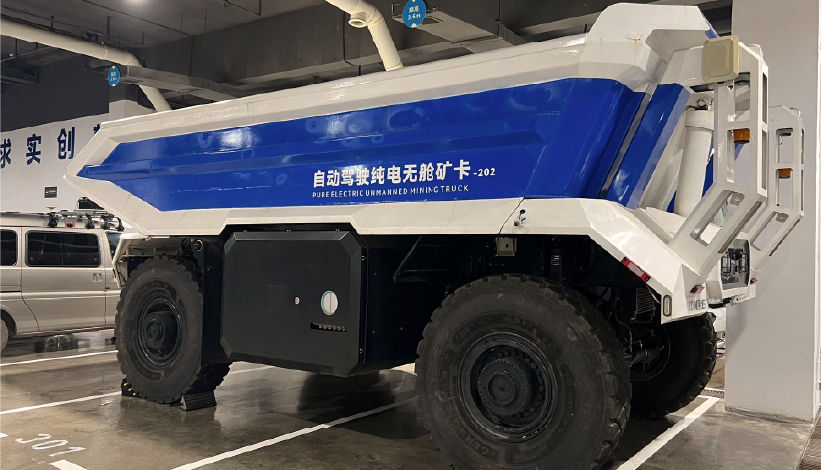
Unmanned electric mining truck – moving from pilot stage to commercialisation in 2026.
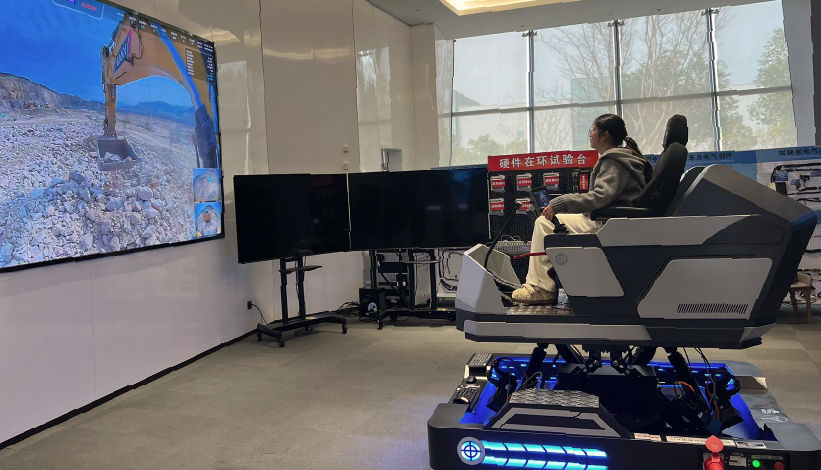
Using 5G tele‑remote technology, excavators can be operated from up to ~1,000km away, allowing safe operation in harsh conditions including disaster zones, toxic environments and confined tunnels.
Property - Secondary market activity in tier-1 cities has strengthened post the lunar new year. Following a ~40% transaction volume correction since 2022, volumes are now rising, listings declining and prices stabilising. Rental fundamentals remain resilient, suggesting that sentiment rather than underlying demand has been the primary constraint for the sector.
In response to recent geopolitical developments, the Chinese government is likely to intensify its commitment to energy independence and supply chain resiliency. With AI’s increasing role in defense and warfare, China is also expected to continue to build out its AI infrastructure.
A wider opportunity set
India and China’s distinct points in the economic cycle broaden the investment universe for strategies that can capture opportunities in both. India offers exposure to domestic recovery and reform‑led growth, while China provides leverage to global capex, trade and technological upgrading. Importantly, rising energy and geopolitical shocks are reinforcing strategic priorities around resilience, electrification and supply‑chain security in both economies. Evolving China–India cooperation adds another dimension to the opportunity set. India recently eased restrictions on Chinese power and coal equipment to relieve its infrastructure project bottlenecks. The EV supply chain could be the next area of cooperation, with China’s manufacturing scale and technology supporting India’s electrification push, opening investable opportunities across supply chains on both sides.
Interesting reads









Singapore by Eastspring Investments (Singapore) Limited (UEN: 199407631H)
Australia (for wholesale clients only) by Eastspring Investments (Singapore) Limited (UEN: 199407631H), which is incorporated in Singapore, is exempt from the requirement to hold an Australian financial services licence and is licensed and regulated by the Monetary Authority of Singapore under Singapore laws which differ from Australian laws
Hong Kong by Eastspring Investments (Hong Kong) Limited and has not been reviewed by the Securities and Futures Commission of Hong Kong.
Indonesia by PT Eastspring Investments Indonesia, an investment manager that is licensed, registered and supervised by the Indonesia Financial Services Authority (OJK).
Malaysia by Eastspring Investments Berhad (200001028634/ 531241-U) and Eastspring Al-Wara’ Investments Berhad (200901017585 / 860682-K).
Thailand by Eastspring Asset Management (Thailand) Co., Ltd.
United States of America (for institutional clients only) by Eastspring Investments (Singapore) Limited (UEN: 199407631H), which is incorporated in Singapore and is registered with the U.S Securities and Exchange Commission as a registered investment adviser.
European Economic Area (for professional clients only) and Switzerland (for qualified investors only) by Eastspring Investments (Luxembourg) S.A., 26, Boulevard Royal, 2449 Luxembourg, Grand-Duchy of Luxembourg, registered with the Registre de Commerce et des Sociétés (Luxembourg), Register No B 173737.
Chile (for institutional clients only) by Eastspring Investments (Singapore) Limited (UEN: 199407631H), which is incorporated in Singapore and is licensed and regulated by the Monetary Authority of Singapore under Singapore laws which differ from Chilean laws.
The afore-mentioned entities are hereinafter collectively referred to as Eastspring Investments.
The views and opinions contained herein are those of the author, and may not necessarily represent views expressed or reflected in other Eastspring Investments’ communications. This document is solely for information purposes and does not have any regard to the specific investment objective, financial situation and/or particular needs of any specific persons who may receive this document. This document is not intended as an offer, a solicitation of offer or a recommendation, to deal in shares of securities or any financial instruments. It may not be published, circulated, reproduced or distributed without the prior written consent of Eastspring Investments. Reliance upon information in this document is at the sole discretion of the reader. Please carefully study the related information and/or consult your own professional adviser before investing.
Investment involves risks. Past performance of and the predictions, projections, or forecasts on the economy, securities markets or the economic trends of the markets are not necessarily indicative of the future or likely performance of Eastspring Investments or any of the funds managed by Eastspring Investments.
Information herein is believed to be reliable at time of publication. Data from third party sources may have been used in the preparation of this material and Eastspring Investments has not independently verified, validated or audited such data. Where lawfully permitted, Eastspring Investments does not warrant its completeness or accuracy and is not responsible for error of facts or opinion nor shall be liable for damages arising out of any person’s reliance upon this information. Any opinion or estimate contained in this document may subject to change without notice.
Eastspring Investments companies (excluding joint venture companies) are ultimately wholly owned/indirect subsidiaries of Prudential plc of the United Kingdom. Eastspring Investments companies (including joint venture companies) and Prudential plc are not affiliated in any manner with Prudential Financial, Inc., a company whose principal place of business is in the United States of America or with the Prudential Assurance Company Limited, a subsidiary of M&G plc (a company incorporated in the United Kingdom).