



May 2026|5 min read


Executive Summary
- AI is widely perceived as a software and chips revolution led by US. However, Asia leads the enabling hardware revolution.
- Every layer of the physical AI stack must be fabricated, tested, assembled and scaled using the similar ecosystem which enabled Asia to dominate the consumer electronics supply chain.
- As AI spans both digital and physical realms, Asia’s manufacturing and innovation form the backbone of global AI hardware, presenting an underappreciated structural opportunity for investors.
When investors think of AI, they usually think of foundation models (e.g. GPT, Claude etc), computing chips (e.g. NVIDIA, AMD etc) and applications (e.g. Autonomous driving, Enterprise analytics etc). However, all of these are unable to function without a physical layer of high-speed interconnects, powertrains and precision mechanical components. This hardware layer is where Asia dominates and its edge is rooted in the region’s long history of manufacturing the world’s consumer electronics. Asia’s scale and experience in precision manufacturing, as well as its innovation help to underpin its role in today’s global tech and AI supply chains – a position that is difficult to displace or replicate. My tour of 6 cities in China over 4 days reinforces my view of Asia’s edge in the AI hardware ecosystem and the structural opportunities that are under appreciated by many investors today.
The physical backbone of AI datacentres
Rising AI workloads are increasing the need for AI servers and server racks, which are in turn driving data centre growth. US hyperscalers capex commitments have crossed a staggering USD700 billion for 20261.
Cable cartridges
In Dongguan, I visited one of the biggest suppliers of cable cartridges to AI server racks where long automated production lines converted raw copper wires into finished products, with engineers overseeing key points along the points along the process. Copper cables are vital interconnects moving data across the AI infrastructure. Each generation of AI chip with higher computing power requires a corresponding higher bandwidth of cable to transfer the data. Bandwidth of the cable depends largely on the quality of the taping, cabling, braiding and lamination during the manufacturing process.
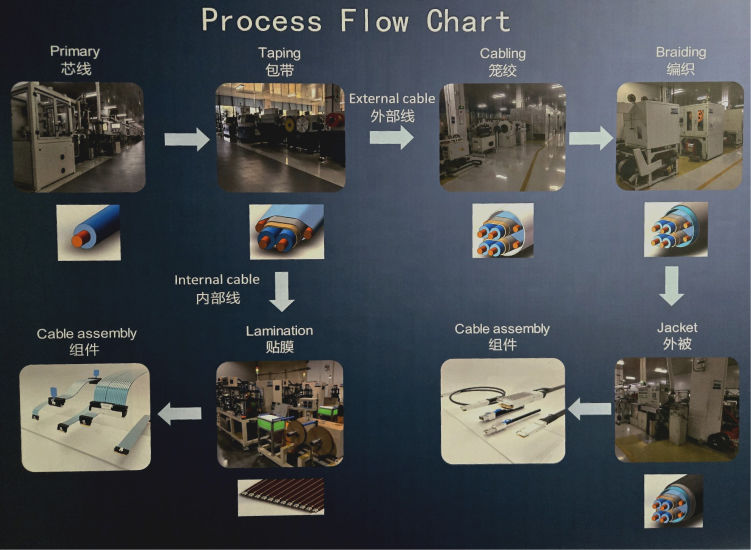
Process flow of cable cartridge production
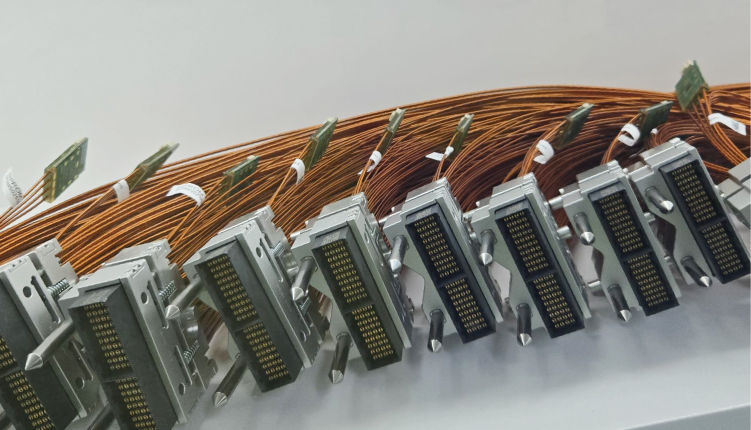
Final cable cartridge assembly
AI server infrastructure
I also visited a facility making precision metal parts in Changshu. As AI workloads involve massive parallel processing, extreme power density, fast data movement and continuous utilisation, this impacts the design of AI server infrastructure. For example, metal housing for connectors need to act as active thermal pathways, and not just protective shells. Cold plates with micro-channel geometries which consist of metal plates with extremely fine internal channels allow coolant to flow directly over high‑performance AI chips, efficiently removing heat. EMI shielding - protective layers typically made of metal foil or braided wire that wrap around electrical cables - help prevent unwanted electromagnetic signals from interfering with data transmission. This is especially important for AI servers, where large volumes of data must move quickly and accurately between chips, servers, and racks.
These complex components require precision Computer Numerical Control (CNC) manufacturing processes where computer-controlled machines cut, shape and drill metals or plastic into highly accurate components, with consistent quality and at scale. Asia has built deep, end to end expertise in CNC manufacturing through decades of producing high-precision components at scale for consumer electronics. This is a structural advantage built on scale, precision, integration and speed, which has become more important as manufacturing shifts towards higher-performance and infrastructure intensive technologies.
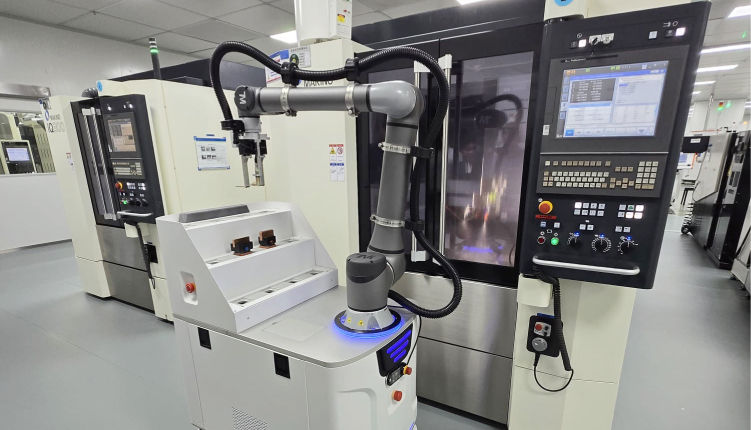
Autonomous Mobile Robot replenishing cutting tools in a CNC machine producing precision mechanical parts.
Power architecture
Next, I visited the smart manufacturing factory of a cult Electric Vehicle (EV) brand in Beijing – where the level of its multi-dimensional automation felt like I was stepping into a Transformer movie. EVs represent the most mature intersection between AI infrastructure and humanoid robotics, because all three make use of the same electro-mechanic foundation in electric drivetrains, high density interconnects and precision manufacturing.
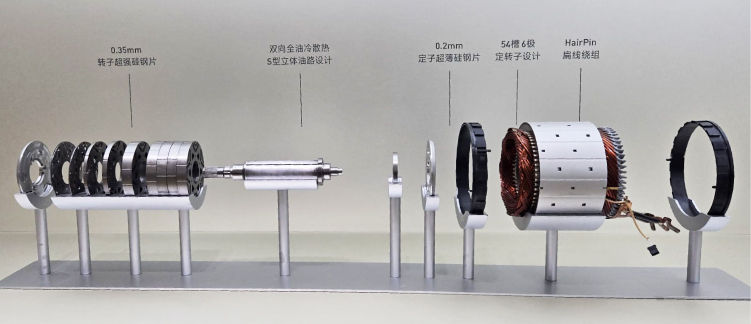
Precision parts of stator-rotor drive system powering the EV drive train.
The EV industry has accelerated innovation in high-voltage Direct Current (DC) systems – capabilities that are now being applied to power-hungry AI data centres. Most data centres today use an AC‑based power architecture where each conversion to DC wastes energy as heat, adds complexity and cost as well as creates more points of failure. This was manageable for traditional servers, but AI data centres dramatically increase power loads, making inefficiencies more expensive.
Asia’s edge in EV manufacturing and leadership in High-Voltage Direct Current (HVDC) systems strengthens its role in enabling HVDC data-centre architecture. Thinner cooler cables and power semiconductors with lower switching losses are common foundational blocks in both EVs and HVDC data-centre architecture.
Hardware that gives AI a body and reach
Beyond data centers, the next phase of AI evolution is physical, taking form through robots that operate in the real world and extending its reach to satellites in space.
Robots
Humanoid robots represent embodied AI where it transcends from the digital to the physical realm. While AI training determines a robot’s functionalities, its core capability is in the actuators within the joints, which determines the robot’s precision, payload capacity and torque sensitivity. In Changsha, I visited an Original Design Manufacturing (ODM) facility producing humanoid robots for more than a hundred global brands. I saw several future use cases of robots from restocking retail shelves and doing domestic chores to deployment in industrial production lines. Asia has become the global production hub for humanoid robots given its ability to manufacture actuators, precision components and deliver ODM at scale.
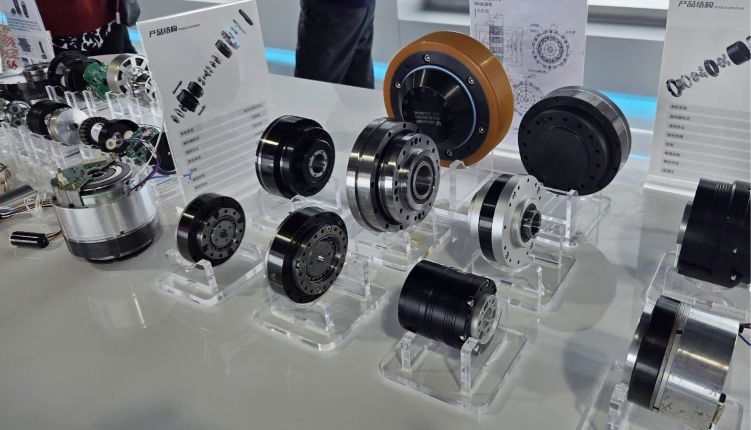
Actuators joints comprising of key components of harmonic reducer and brushless electric motors.
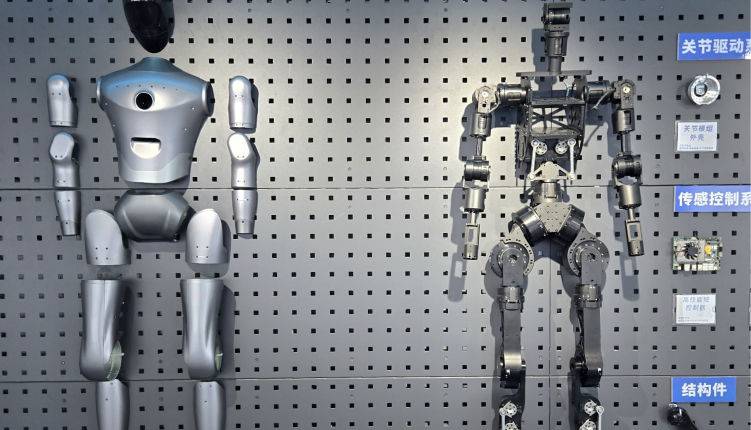
Anatomy of a humanoid robot
Satellites
I also visited a facility in Changshu that manufactures components for satellites. Low Earth Orbit (LEO) satellites are currently a vital communication layer, whether in military action in the ongoing Ukraine-Russia conflict or powering internet traffic in aircrafts. There are proposals for satellites to act as space-based data centres; SpaceX has filed plans with the US Federal Communications Commission for a constellation of 1 million data-center satellites, designed to operate in orbits with continuous sunlight to power AI chips. These satellites will require enormous solar arrays which utilise Ultra-Thin Glass (UTG) encapsulation to provide flexible protection while maintaining solar conversion efficiency. Asia’s deep expertise in UTG, from crystal growth and ultra-thin slicing to optical polishing is built from decades of experience in consumer electronics. This expertise positions the region well in supporting next-generation space-based AI computing architectures.
Asia: Backbone of AI hardware
Asia is the industrialisation engine of AI. Every layer of the physical AI stack, from advanced power systems and high-speed interconnects to precision actuators and satellite components must be fabricated, tested, assembled and scaled using the similar ecosystem which enabled Asia to dominate the consumer electronics supply chain. As AI becomes more deeply embedded in both digital and physical realms, Asia’s comprehensive manufacturing capabilities and innovation infrastructure form the backbone of global AI hardware. This physical foundation remains underappreciated and offer investors long-term structural opportunities.
Glossary
High-speed interconnects - High speed interconnects are the data highways that move information rapidly between computer chips and servers. They are important because large AI models require vast amounts of data to move rapidly between many processors working together.
Powertrains - The set of components that provide power to a vehicle and enables movement. In electric and AI-enabled vehicles, this is increasingly optimised and managed by software and AI to improve performance and efficiency.
Interesting reads









Sources:
1 As of 7 May 2026.
Singapore by Eastspring Investments (Singapore) Limited (UEN: 199407631H)
Australia (for wholesale clients only) by Eastspring Investments (Singapore) Limited (UEN: 199407631H), which is incorporated in Singapore, is exempt from the requirement to hold an Australian financial services licence and is licensed and regulated by the Monetary Authority of Singapore under Singapore laws which differ from Australian laws
Hong Kong by Eastspring Investments (Hong Kong) Limited and has not been reviewed by the Securities and Futures Commission of Hong Kong.
Indonesia by PT Eastspring Investments Indonesia, an investment manager that is licensed, registered and supervised by the Indonesia Financial Services Authority (OJK).
Malaysia by Eastspring Investments Berhad (200001028634/ 531241-U) and Eastspring Al-Wara’ Investments Berhad (200901017585 / 860682-K).
Thailand by Eastspring Asset Management (Thailand) Co., Ltd.
United States of America (for institutional clients only) by Eastspring Investments (Singapore) Limited (UEN: 199407631H), which is incorporated in Singapore and is registered with the U.S Securities and Exchange Commission as a registered investment adviser.
European Economic Area (for professional clients only) and Switzerland (for qualified investors only) by Eastspring Investments (Luxembourg) S.A., 26, Boulevard Royal, 2449 Luxembourg, Grand-Duchy of Luxembourg, registered with the Registre de Commerce et des Sociétés (Luxembourg), Register No B 173737.
Chile (for institutional clients only) by Eastspring Investments (Singapore) Limited (UEN: 199407631H), which is incorporated in Singapore and is licensed and regulated by the Monetary Authority of Singapore under Singapore laws which differ from Chilean laws.
The afore-mentioned entities are hereinafter collectively referred to as Eastspring Investments.
The views and opinions contained herein are those of the author, and may not necessarily represent views expressed or reflected in other Eastspring Investments’ communications. This document is solely for information purposes and does not have any regard to the specific investment objective, financial situation and/or particular needs of any specific persons who may receive this document. This document is not intended as an offer, a solicitation of offer or a recommendation, to deal in shares of securities or any financial instruments. It may not be published, circulated, reproduced or distributed without the prior written consent of Eastspring Investments. Reliance upon information in this document is at the sole discretion of the reader. Please carefully study the related information and/or consult your own professional adviser before investing.
Investment involves risks. Past performance of and the predictions, projections, or forecasts on the economy, securities markets or the economic trends of the markets are not necessarily indicative of the future or likely performance of Eastspring Investments or any of the funds managed by Eastspring Investments.
Information herein is believed to be reliable at time of publication. Data from third party sources may have been used in the preparation of this material and Eastspring Investments has not independently verified, validated or audited such data. Where lawfully permitted, Eastspring Investments does not warrant its completeness or accuracy and is not responsible for error of facts or opinion nor shall be liable for damages arising out of any person’s reliance upon this information. Any opinion or estimate contained in this document may subject to change without notice.
Eastspring Investments companies (excluding joint venture companies) are ultimately wholly owned/indirect subsidiaries of Prudential plc of the United Kingdom. Eastspring Investments companies (including joint venture companies) and Prudential plc are not affiliated in any manner with Prudential Financial, Inc., a company whose principal place of business is in the United States of America or with the Prudential Assurance Company Limited, a subsidiary of M&G plc (a company incorporated in the United Kingdom).